
The Root-of-Trust cannot be tampered with, which then allows the system to detect if software loaded later may be trusted or not. Builders must be on the lookout for microcontroller solutions that have a hardware-based Root-of-Trust built into them. It is a safe and tamper-proof basis that assures the safety of a device’s hardware and software. RoT establishes belief in a device by guaranteeing its authenticity and defending it in opposition to malicious attacks. RoT is crucial in securing the sprawling network of billions of interconnected devices that make up the IoT. While IoT devices present an unprecedented level of comfort, flexibility, and accessibility, their widespread adoption has wide-reaching implications for IoT system safety.
These requirements push for high-level safety while not explicitly mandating the utilization of hardware-based security. Nevertheless, IoT nodes are often large-volume, cost-optimized appliances, creating challenges to stability security and value. The best deployment model begins with a manufacturing or provisioning circulate that injects a singular gadget id, binds it to hardware-backed proof, and data that binding in an inventory the operations group can belief. Every system needs a verifiable onboarding step that ties the physical unit, its cryptographic id, and its meant surroundings together. The security settings will also establish the security contexts during which the various software elements within the chain of belief are allowed to operate. A sturdy PKI strategy is amongst the pillars of enterprise safety posture, especially for IoT gadget producers contending with a lot of devices.
What Is A Rot?
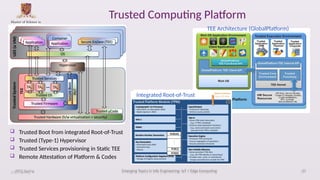
A Root-of-Trust establishes from system boot that authorized software program is running on the system. It serves as the base trusted software that then authenticates and validates the following piece of software program loaded, which establishes a sequence of trust. The system can be easily attacked with no Root-of-Trust as a end result of there could be nothing to authenticate the loaded firmware. With the rising variety of IoT gadgets, utilizing RoT has turn into essential to ensure the security of these interconnected units. RoT is able to establishing gadget belief, authenticating identities, encrypting data, and enabling safe updates, which makes it an indispensable tool within the struggle against increasingly subtle cyber threats. The Web of Issues has turn into a big force across various industries within the period of speedy digital transformation.
- Two of the original four basic necessities of a RoT are all the time to be trusted, and at all times to run as anticipated, indicating the need for a secure storage factor, immutable to unauthorized users.
- The CryptoManager RT-6xx Root of Trust sequence is at the forefront of a model new category of programmable hardware-based safety cores with its new Quantum Protected Cryptography features.
- The CryptoManager RT-6xx Root of Belief family from Rambus is the latest era of absolutely programmable FIPS compliant hardware security cores providing Quantum Safe security by design for information heart and other extremely safe purposes.
- Depending on the necessities of the endpoints at which the RoT is to be put in, the variations of RoTs are very diverse certainly.
- Hardware root of belief can help with a variety of security points which would possibly be primarily divided into pre-boot and post-boot.
Trusted Connectivity Alliance Welcomes New Gsma Iot Protected Specification As A Milestone In Iot Safety Standardisation
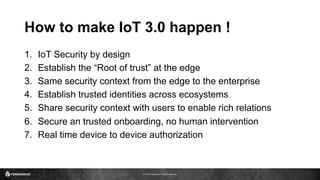
When the property will span factories, regions, or product traces, standardization issues more than cleverness. A single repeatable identification sample is simpler to audit, revoke, and get well than a patchwork of one-off gadget exceptions. With international cellular IoT connections persevering with to grow quickly, marketplace momentum for IoT SAFE is building. To support growing deployments, the GSMA has published a new take a look at specification to ensure interoperability between totally different implementations. So as to construct on the previous works of defining a RoT, maybe it is best to start with how a RoT has already been defined.
Components To Secure Embedded Methods – Half #4 Safe Bootloaders
A gadget root of belief is the anchor that lets each later safety determination rest on something verifiable as an alternative of assumed. For IoT teams, it is what turns a box of hardware into a managed system identification with provable origin, authenticated boot, and a recoverable lifecycle. If you defer that anchor until after deployment, you inherit avoidable uncertainty about who the device is, what code it runs, and whether updates are legitimate. A Root-of-Trust is an immutable course of or id used as the primary entity in a belief chain.
What Are The Advanced Necessities Of A Rot?
Having a RoT that may be dropped into one’s design with little to no modifications can be the best solution. It would be good to look for a RoT with native help for the AXI/AHB/APB bus protocol. Or, perhaps the RoT might be put in a sign limited system, so a serial interface is the only option. If the RoT has been implemented utilizing a peripheral bus, such as APB, then it could be positioned in a system as illustrated in the under figure 5. An attacker can instantly observe the memory contents at a comparatively modest price utilizing Scanning Electron Microscopy (SEM).
Finally, a control logic unit of some sort is needed to have all the parts of a RoT run in harmony, and the final picture of how a RoT works is revealed. A assortment of cryptographic modules, secure storage, and a management logic unit to wrap it all https://www.testking.us/evaluating-resource-risks-in-global-geothermal-infrastructure-projects/ together make up a RoT. Depending on the necessities of the endpoints at which the RoT is to be installed, the variations of RoTs are very various certainly. Attackers can bodily tamper with IoT devices which makes software-based security insufficient to protect IoT from fraud, tampering and different integrity and DDoS assaults. Examples of those capabilities are data encryption for preserving confidentiality and digital signatures to make sure authenticity and the integrity of data. The ultimate goal of the basis of trust is to guarantee that the key keys used for data encryption or digital signatures are protected towards disclosure.
The largest problem for “root of trust” safety ICs is resistance towards bodily attacks, such as direct probing and so-called side-channel attacks. This Nationwide Cybersecurity Heart of Excellence (NCCoE) project will focus on approaches to trusted network-layer onboarding of IoT units and lifecycle administration of the gadgets. The NCCoE will construct a trusted network-layer onboarding solution instance using commercially out there technology that can tackle a set of cybersecurity challenges aligned to the NIST Cybersecurity Framework. Groups should also distinguish between belief anchor ownership and day-to-day operational issuance. The root CA, intermediate CAs, system certificates, and revocation course of should not all reside in the identical operational blast radius. When those features are collapsed, compromise or misconfiguration at one layer can undermine the whole fleet.
Leave a Reply