Under the corrugated iron roof of a Darwin community hall, the hum of ceiling fans competes with the clatter of cards as locals stack chips through a tense final table. That quiet tension before the money jumps is where real profit hides, not in the early chaos. Poker bubble play strategy separates the patient grinder from the reckless shooter, and the same discipline I learned managing creative strategy teams for NextGen and NYX over twenty-four years translates straight to the felt. You do not need a lucky run; you need a decision framework.
Reading the Table Before You Act
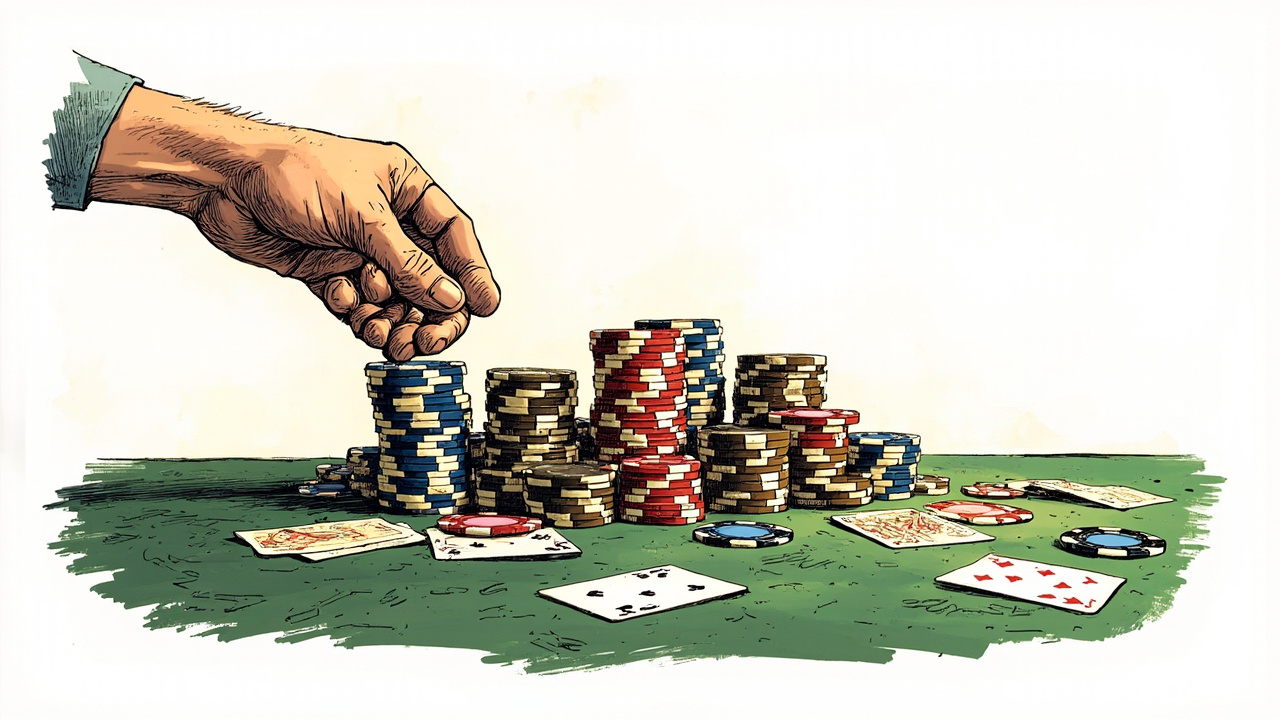
The bubble phase rewards players who treat position like inventory rather than a privilege. When you sit short-stacked behind a deep opponent, your range compresses and your bluff frequency should drop with it. I have seen too many amateurs force action from the blinds because they confuse aggression with edge, a mistake I used to flag during slot creative strategy reviews where impulse overrides math. The right move is often folding top pair weak kicker when the pot odds do not justify the implied odds, especially when a short stack is likely to shove any two cards to steal the blinds.
Players building a poker bubble play strategy should weigh three questions before the next hand: what is my effective stack relative to the blinds, what range does my opponent represent, and how many players remain to bust. If the answer to the last question is two or fewer, survival beats accumulation until you are among the final three. You can verify your own table reads against a structured reference at https://elvisfrogtruewaysau.com/enaus/, which outlines how position and stack depth interact during the bubble window. That kind of disciplined checklist matters more than any gut feeling when the payout ladder suddenly tilts toward the survivors.
Stack Depth and Survival Math
When to Tighten and When to Press
Stack depth dictates whether you play for survival or for accumulation, and the crossover point usually sits around fifteen big blinds. Above that line, you can keep stealing blinds and probing weak continuation bets without risking immediate elimination. Below it, your options narrow to all-in or fold, and the correct play often means waiting for a premium hand rather than widening your shoving range into a calling station. Harrison Gibson, Head of Public Relations, Sunburnt Country Interactive, notes that bubble discipline rewards players who respect the payout jump more than the pot odds of a single street. That mindset keeps you from turning a manageable mid-stack into a short stack through impatience.
Reading Opponent Timing and Tendencies
Timing tells and betting patterns become louder when players feel the money jump, so watch for the maniac who suddenly slows down and the nit who starts raising more frequently. A player who has been folding for an hour and then leads out on the river is often protecting a hand that already beat yours, not bluffing. Olivia Lewis, Head of Product, Southern Star Esports, points out that pattern recognition matters because bubble pressure changes behaviour faster than any pre-flop chart can predict. When you spot that shift, adjust your calling frequency downward and let the aggressive players eliminate each other before you commit your own stack.
Matching the Strategy to Your Session
The bubble plan only works if it fits the format and your own risk tolerance, so decide before you sit down whether you are hunting a top-three cash or trying to maximise an already deep stack. Tournament lobbies that run frequent re-entries and shorter levels reward aggression, while single-entry events with slower structures reward patience and selective stealing. Dylan Anderson, Marketing Director, Kangaroo Point Analytics, observes that players who pre-commit to a style based on the level speed and field depth tend to avoid the emotional tilt that burns stacks in the final orbits. If you are playing a softer local field on a quiet arvo, tightening up and letting others knock each other out is often the highest expected value play.
| Detail | What to Expect |
|---|---|
| Position focus | Early-position discipline, late-position stealing |
| Game mix | Hold’em tournaments, mixed events, sit-and-gos |
| Providers | Established tournament software with standard blind structures |
| Bonus mechanics | Reload incentives tied to scheduled tournament series |
| Payments and currencies | AUD deposits and withdrawals with standard processing windows |
| Registration | Basic identity details with standard verification steps |
| Mobile | Tournament access and lobby browsing on mobile browsers |
| Support | Email and live chat during local session hours |
| Loyalty | Points earned on tournament fees, redeemable for event entries |
The right bubble approach is the one you can execute without second-guessing every orbit, because consistency beats improvisation when the payout ladder narrows. Treat the bubble as a separate game with its own risk rules, and you will walk away with more cashes than the players who chase every marginal pot.

Most Australian players do best when they lock in a simple rule set before the bubble starts: fold marginal hands out of position, steal when the stack math supports it, and let the reckless players fight over the blinds until only a few remain. That patient edge compounds over a session and turns a tense final table into a manageable decision tree.